
Walk into the kitchen of any busy restaurant in Riyadh at 2 p.m. in July and you feel the problem immediately. The hoods are pulling thousands of cubic metres of air an hour out of the building. That air has to come from somewhere — and if nobody has planned for it, it comes in hot through every door and gap, or it is stolen from the dining room, dragging the guests' comfort down with it.
Make-up air is not optional
Kitchen exhaust only works if an equal volume of air is supplied back. Without it, hoods under-perform, doors slam, smoke and odour drift into the dining area, and the dining-room AC runs flat out trying to cool air that is being sucked straight out again. Good practice — and most authorities — require a dedicated make-up air supply sized to the exhaust.
The usual answer, and its price
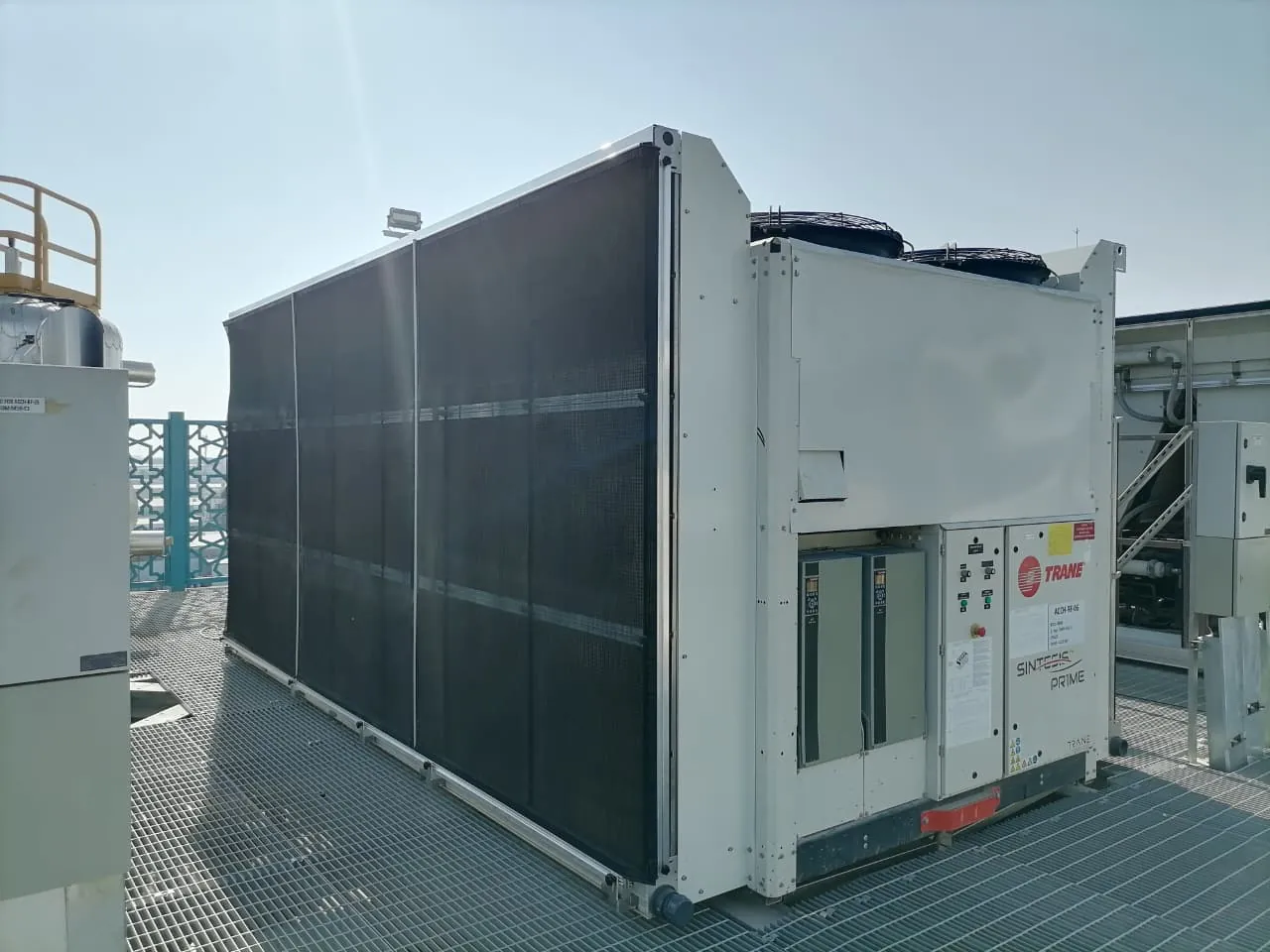
The conventional fix is a DX fresh-air unit: a packaged refrigerant system that cools 100% outdoor air before ducting it into the kitchen. It works, but at a price. Cooling 45°C outdoor air with compressors is the most expensive cooling job in the building. Capital cost is high; electricity is higher; and you now have refrigerant, compressors and condensers above a kitchen that already has enough to maintain.
What an IDEC unit does differently
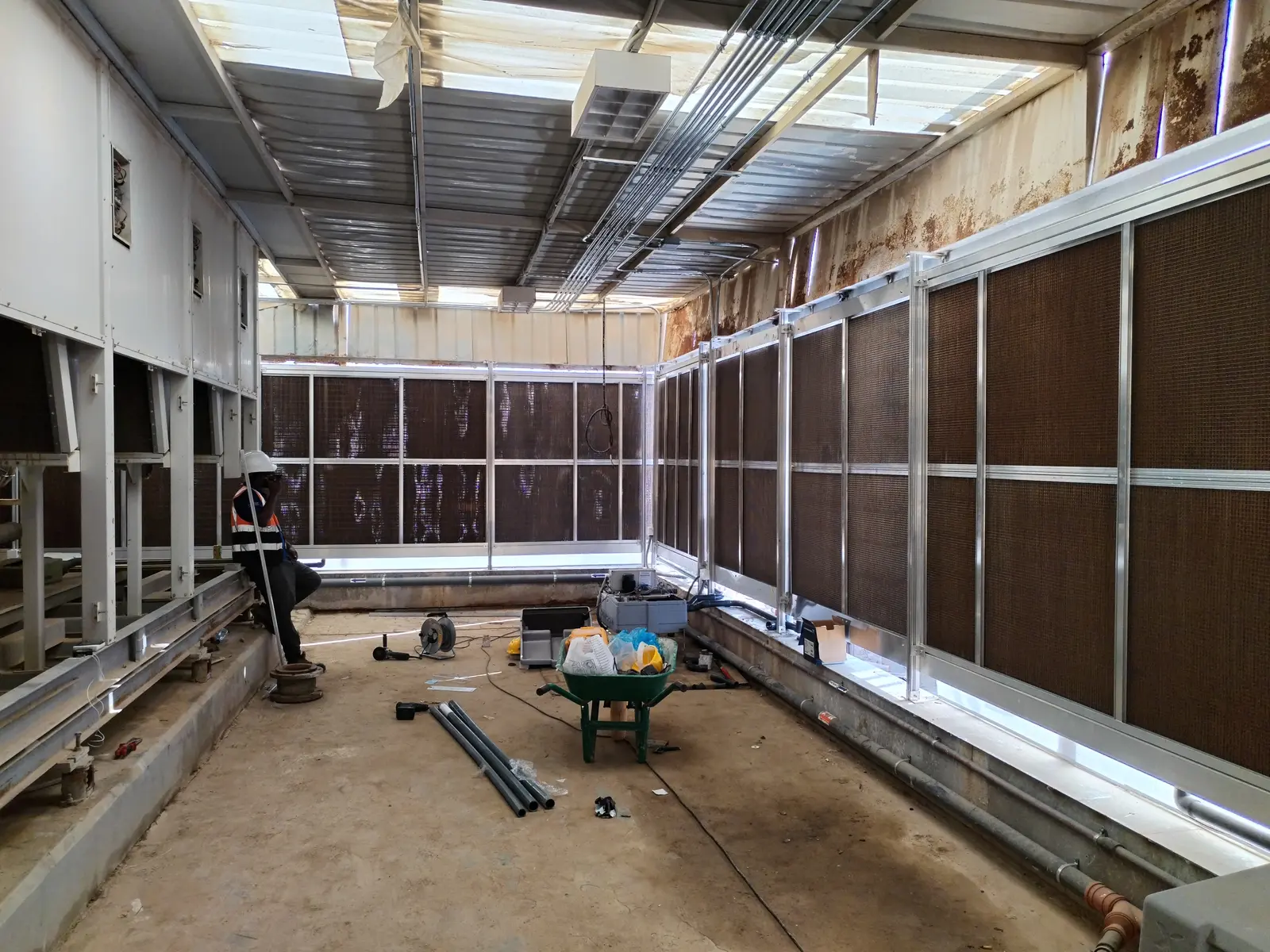
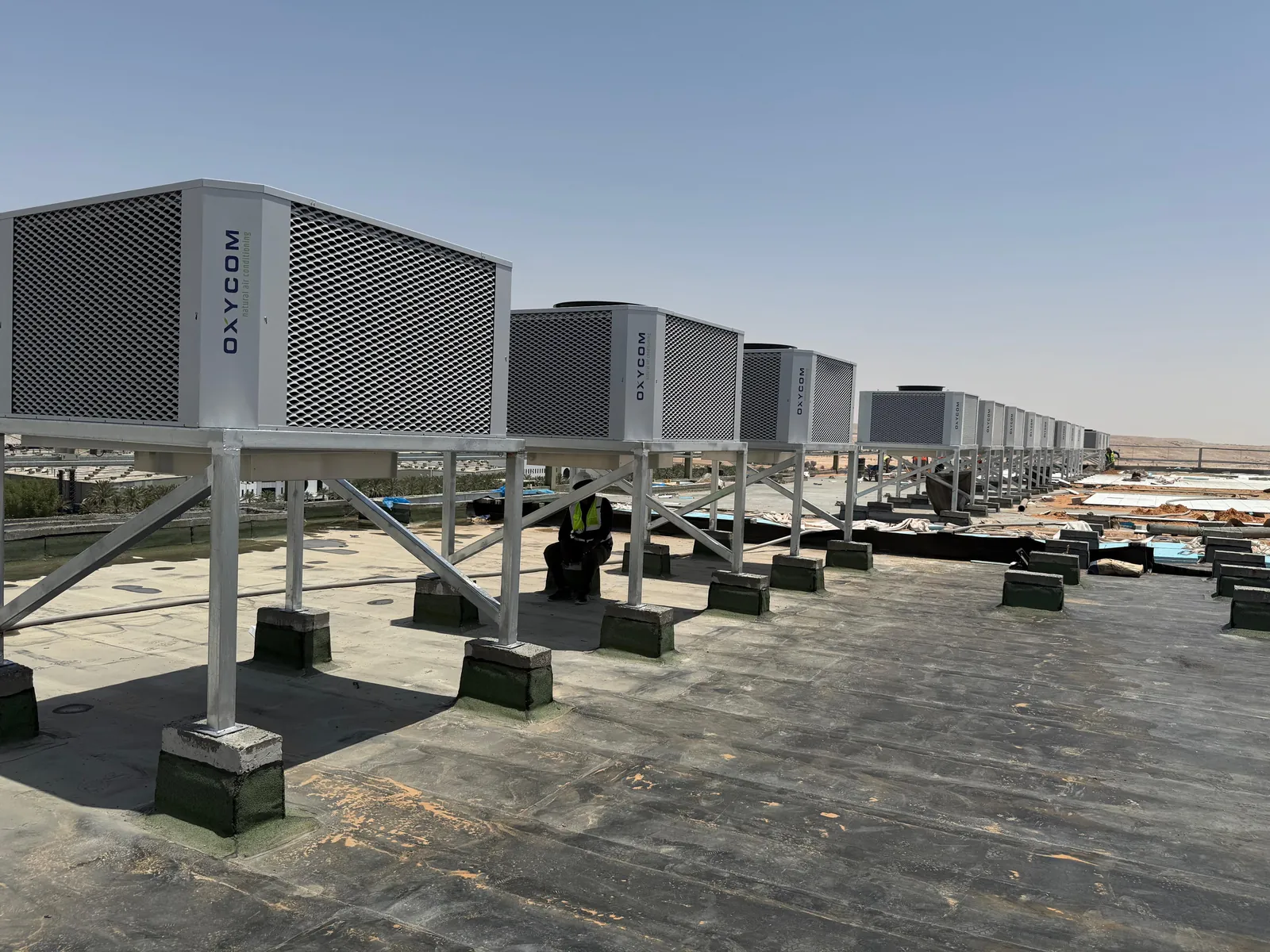
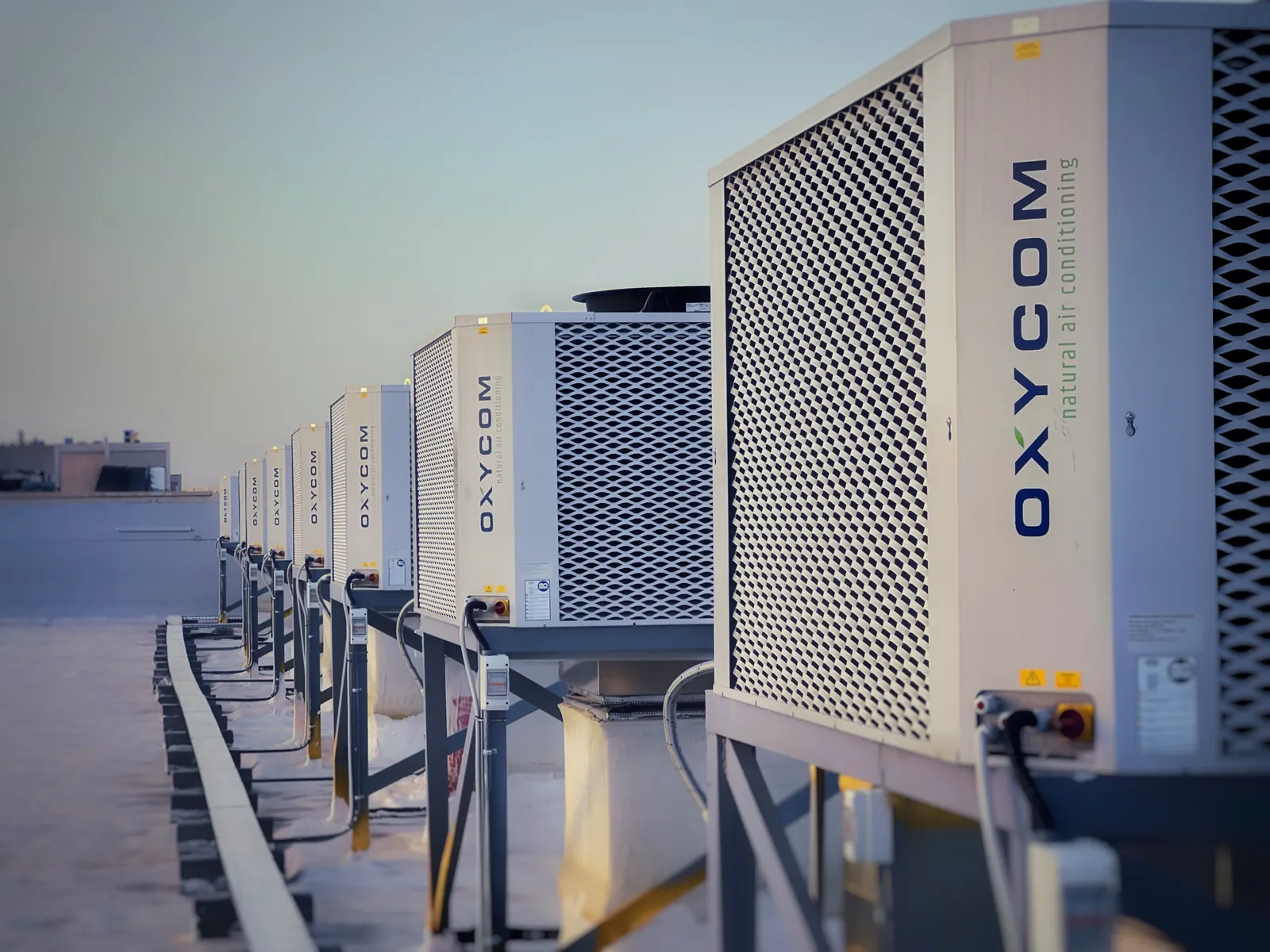
IntrCooll is IDEC — Indirect Direct Evaporative Cooling. The first stage cools the incoming air indirectly — no moisture added — and the second stage cools it further by direct evaporation. In Saudi Arabia's dry inland climate that delivers supply air up to 20°C cooler than outdoors using fans and a small pump, with no compressor and no refrigerant. The air is 100% fresh and filtered, which is exactly what a kitchen needs anyway.
- Capital cost: a fraction of a DX fresh-air unit of the same airflow.
- Running cost: fan and pump power only — typically a small fraction of compressor-based cooling.
- Simplicity: pads, pump and filters; no refrigerant circuit above the kitchen.
- Comfort: a steady stream of cool, clean air where the cooks stand.
“But doesn’t IDEC make it humid?”
Not in this application. The indirect first stage does most of the work without adding water vapour, and the air supplied to the kitchen is immediately exhausted by the hoods — it does not linger. In coastal cities we design around the humid peaks; inland, the numbers are hard to argue with.
Proof in the field
Dosan Energy runs IntrCooll make-up air and comfort systems in restaurants across the Kingdom — from a 1,500 m² two-storey restaurant in Taif with six units covering dining and kitchen areas to quick-service outlets — alongside food factories and a 50,000 m² mall food court.
How to start
Send us your hood schedule or simply the restaurant address. We survey the kitchen, size the unit to your exhaust, and quote the IntrCooll option next to the DX alternative so you can compare capital and running cost on one page.
Kitchen make-up air with IntrCooll →
Related service
Kitchen Make-Up Air
Cooled, filtered 100% fresh make-up air for commercial kitchens at a fraction of the capital and running cost of a DX fresh-air unit. Running in restaurants across the Kingdom.
Explore the service