
What does “adiabatic” mean?
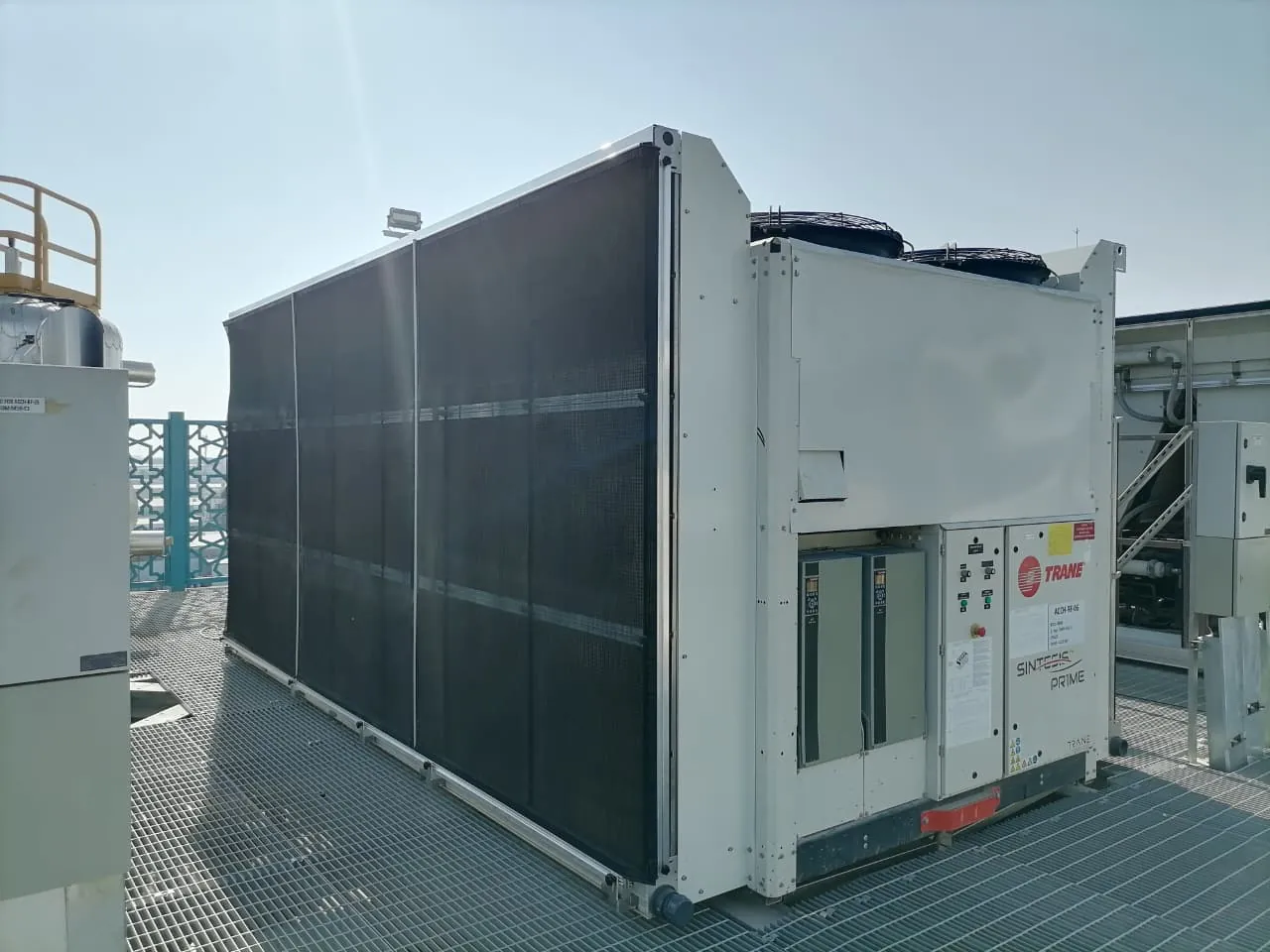
In physics, adiabatic describes a temperature change that occurs without heat transfer to or from the surroundings. Applied to cooling, it describes using the natural cooling effect of evaporation to lower the air temperature before it enters the main cooling unit. The result: greater efficiency, significant energy savings and lower operating costs.
How adiabatic pre-cooling works on air-cooled equipment
- Air intake — warm outside air is drawn toward the condenser or chiller.
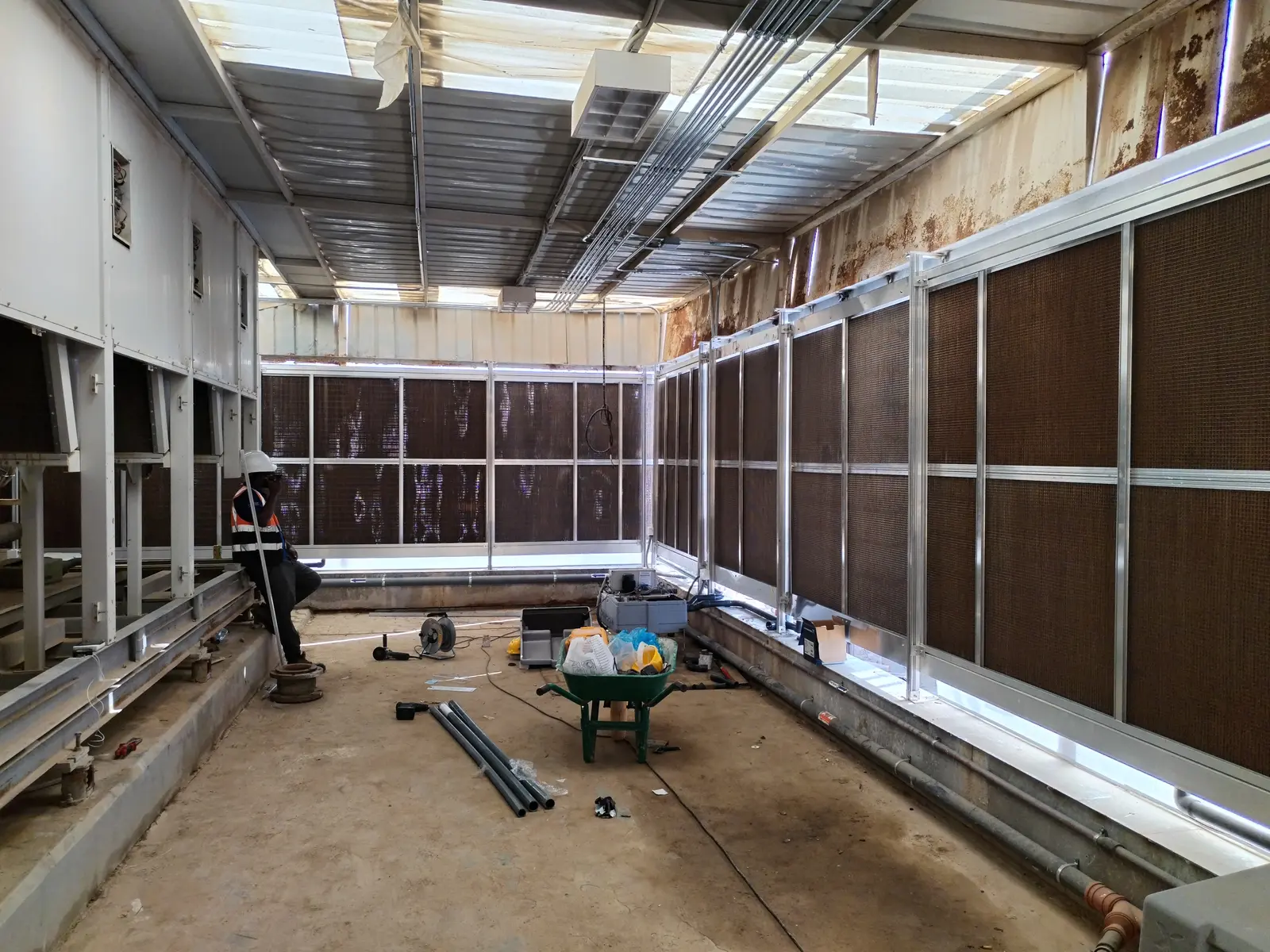
- Pre-cooling stage — the air passes over a wetted surface.
- Evaporative cooling — changing water from liquid to vapour takes energy, so the air-water mixture drops in temperature.
- Enhanced cooling — pre-cooled air enters the heat exchangers; the system works more efficiently and consumes less power.
Why it matters for conventional systems
- Keeps systems efficient in extreme summer heat.
- Extends equipment life and maintenance intervals by reducing mechanical strain.
- Cuts energy costs and can reduce required electrical capacity.
- Simple integration with existing systems — no full replacement.
What you can achieve
- Reduce electricity bills by up to 40%.
- Boost cooling capacity of existing systems by up to 20%.
- Lower peak power demand by up to 30%.
- Comply with energy-efficiency standards and Saudi Vision 2030 sustainability targets.
If you're looking to upgrade your cooling strategy, adiabatic pre-cooling is the cost-effective first step.
Learn about IntrCooll and PreCooll →
Related service
PreCooll Chiller Pre-Cooling
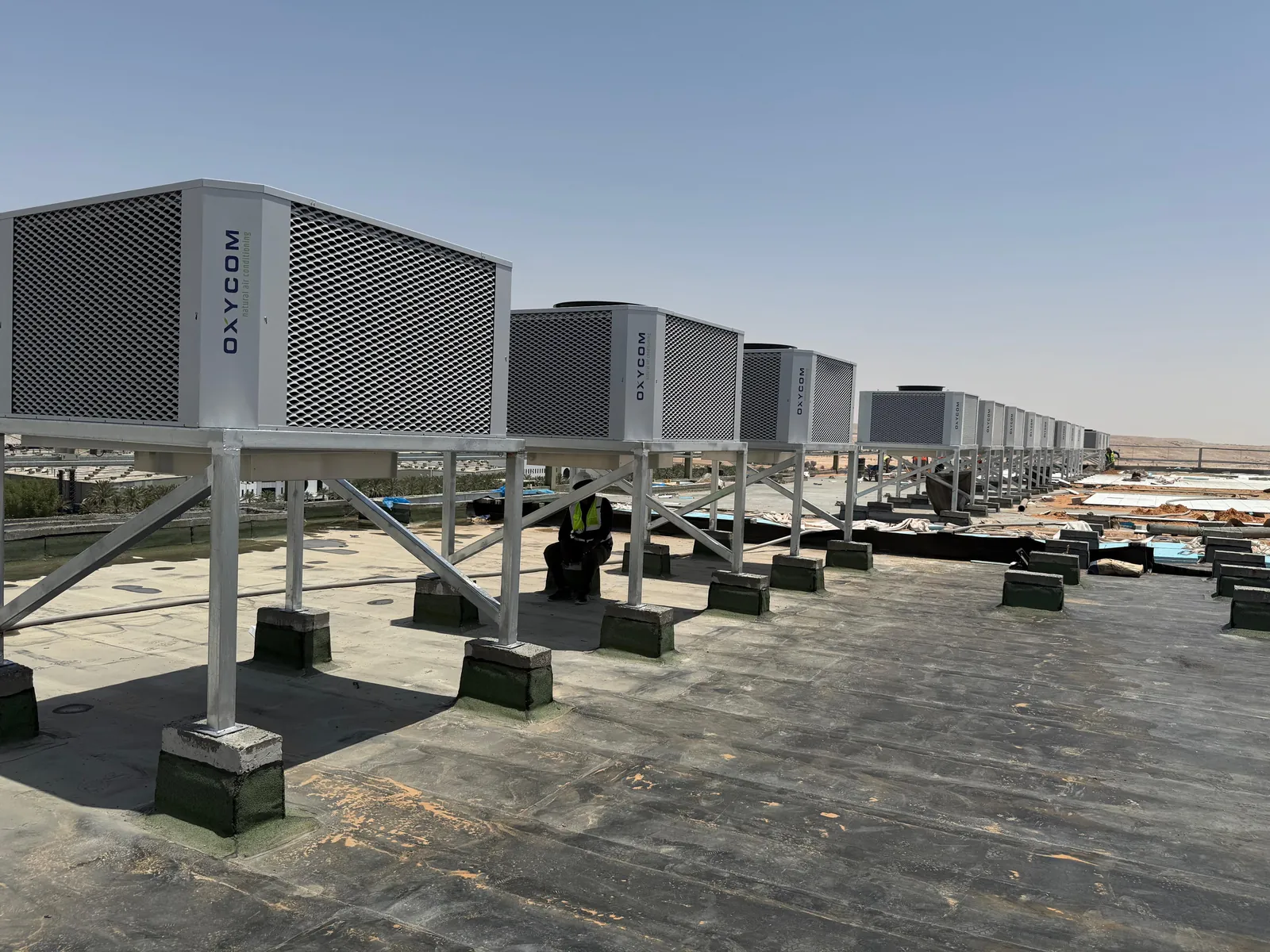
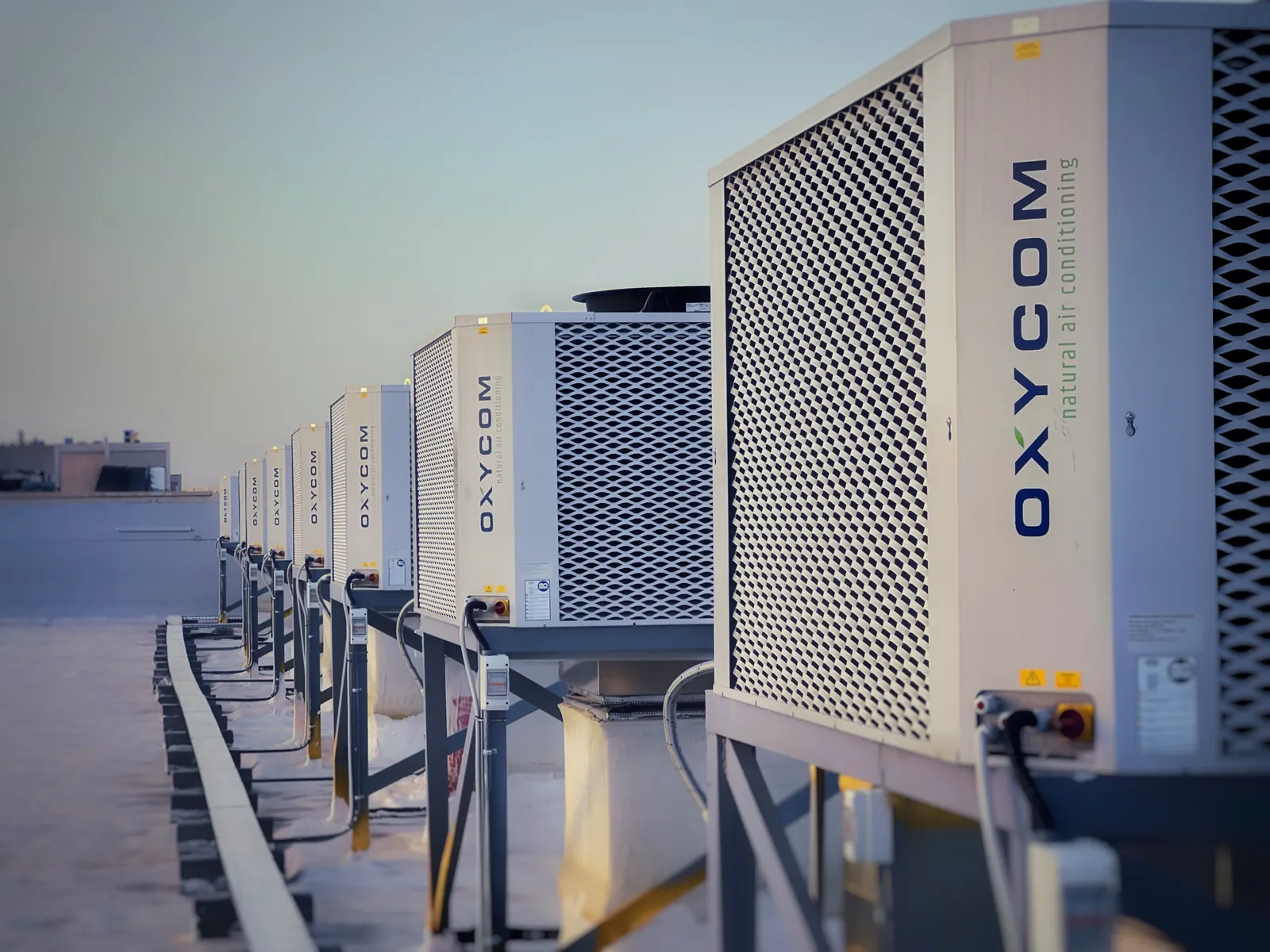
Oxycom PreCooll adiabatic pre-cooling for air-cooled chillers, condensers and dry coolers: 15–25°C cooler entering air, 20–40% less chiller energy, capacity restored on the hottest days.
Explore the service
Share
LinkedIn